AI in Gmail: New Tool Promises to Ease Inbox Overload
Davit Petrosyan · 9/28/2025 · 3 min read
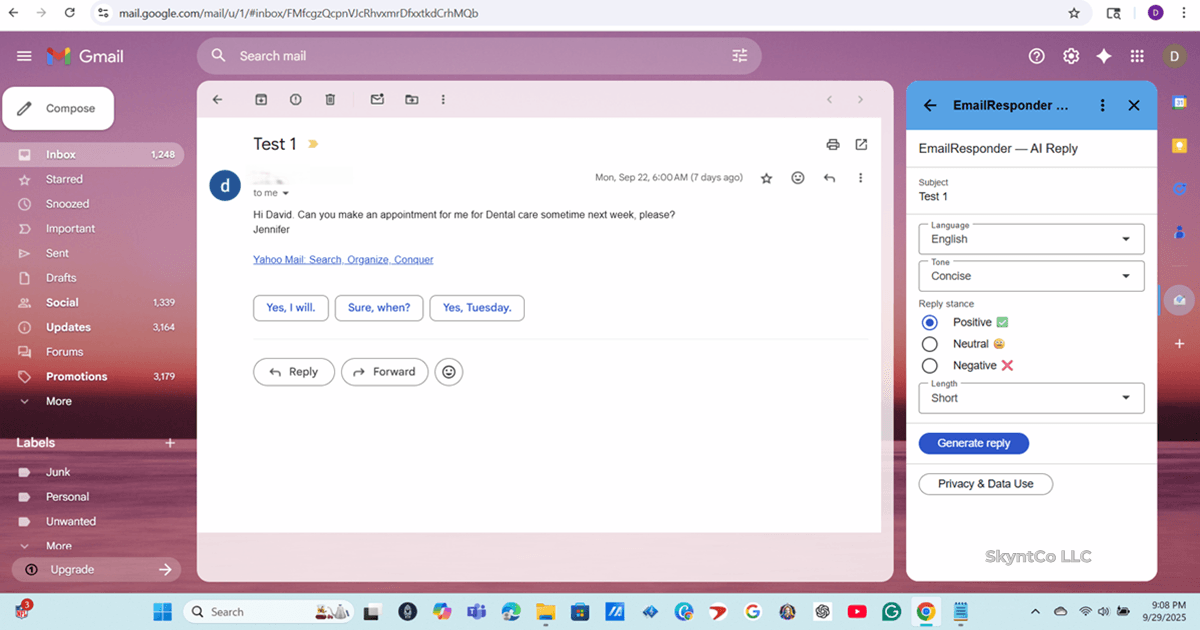
For many professionals, email is both a lifeline and a burden. The average office worker receives over 100 emails a day, and staying on top of replies can feel impossible. Now, a new Gmail add-on called EmailResponder is tapping into artificial intelligence to help users cut through the noise — by drafting context-aware replies automatically.
Inbox Overload Is a Universal Problem
Studies show employees spend up to 28% of their workweek on email. That time commitment isn’t just frustrating; it’s a drain on productivity and mental focus. While “Inbox Zero” has long been a goal for many, the flood of messages often makes it unattainable.
This growing challenge has sparked a wave of AI-driven email tools, each aiming to reduce the time spent typing out repetitive responses. EmailResponder is among the latest, focusing specifically on seamless integration with Gmail.
How It Works Inside Gmail
Unlike third-party apps that require copying and pasting content, EmailResponder functions directly as a Gmail add-on. When a user opens an email, the tool can generate a suggested reply draft based on the message content. The user remains in control — they can edit the draft or send it as-is — but the heavy lifting is done by the AI.
SkyntCo, the company behind the project, says the goal was simplicity: “We wanted something that didn’t feel like yet another platform to manage. Gmail users should be able to save time without leaving their inbox.”
The Technology Behind It
At its core, EmailResponder uses large language models, the same type of AI technology powering many popular chatbots. But while those bots are general-purpose, EmailResponder is trained and tuned for email communication.
The add-on doesn’t auto-send; it drafts. That distinction matters for trust and usability. “No one wants an AI firing off emails in their name without approval,” says SkyntCo. Instead, the system generates a first draft that captures tone, context, and politeness — leaving the final say to the Gmail user.
Balancing Productivity With Privacy
As with any AI tool, privacy is a central concern. According to its developers, EmailResponder is designed to handle message text only long enough to generate the draft. The content isn’t stored long-term, and no ads are attached.
That approach reflects Google’s own policies for add-ons, which require transparency about data handling. For users worried about AI “reading” their email, these safeguards will likely be a key factor in adoption.
Part of a Larger Trend
EmailResponder’s launch comes as part of a broader trend: AI is slowly becoming embedded in everyday workplace tools. Microsoft has introduced Copilot into Outlook, while Google itself has been testing “Help Me Write” features in Gmail.
What makes smaller players like SkyntCo notable is speed and focus. While tech giants roll out sweeping platforms, independent developers are carving out specialized niches that often move faster and respond directly to user pain points.
Early Reception and Next Steps
Though still in its early stages, EmailResponder has already drawn interest from productivity enthusiasts. Social media posts testing the add-on show mixed but promising results: while not every draft is perfect, many users report saving minutes on each reply. Over time, those minutes add up.
SkyntCo has indicated plans to expand the tool’s capabilities and eventually bring similar functionality to Outlook, making it accessible beyond Gmail.
The Bigger Question: Should AI Write Our Emails?
As with many AI applications, tools like EmailResponder raise broader questions. Does delegating routine emails to algorithms free us up for higher-value work — or risk making communication more robotic?
For now, the answer seems to lie in balance. With users' oversight still required, AI-assisted replies may represent a middle ground: speeding up the routine while leaving nuance and judgment to people.
Conclusion
Inbox overload isn’t going away anytime soon, but AI may offer a practical lifeline. EmailResponder’s Gmail integration is one of several signals that automated replies are moving from experimental to mainstream. Whether workers embrace it en masse will depend not only on its accuracy, but on how well it respects privacy and preserves the human touch in communication.
- #AI
- #Gmail
- #Productivity
- #EmailResponder